Set in Sejnane, northern Tunisia, Meryem Joobeur’s 2018 film Brotherhood follows the story of a shepherding family’s son, Malek, who has worked away for the last year in an undisclosed country. After 12 months, he finally returns home: to his mother, father (Mohamed), and brothers, where tensions flare as his family meets his new, younger Syrian wife, who is presented in full niqab. Ultimately, this fuels Mohamed’s suspicions that his son, Malek, has been radicalised by the Islamic State of Iraq and the Levant (ISIL). The film’s ambiguous title speaks to both its depiction of family dynamics and Tunisia’s historical connections to the Muslim Brotherhood through the political party, Ennahda. Its leader, Rached Ghannouchi, was sentenced, in June 2026, to life in prison for ‘forming terrorist alliances’, following his many years of close association with the Brotherhood. As Joobeur mentions in an interview, the film’s brothers were cast by chance, when the director was location scouting for another production with Canadian cinematographer Vincent Gonneville. The title of the film, Ikhwèn (in Darija), plays on both the country’s history of terror and on the formative relationship that Malek shares with his younger siblings.
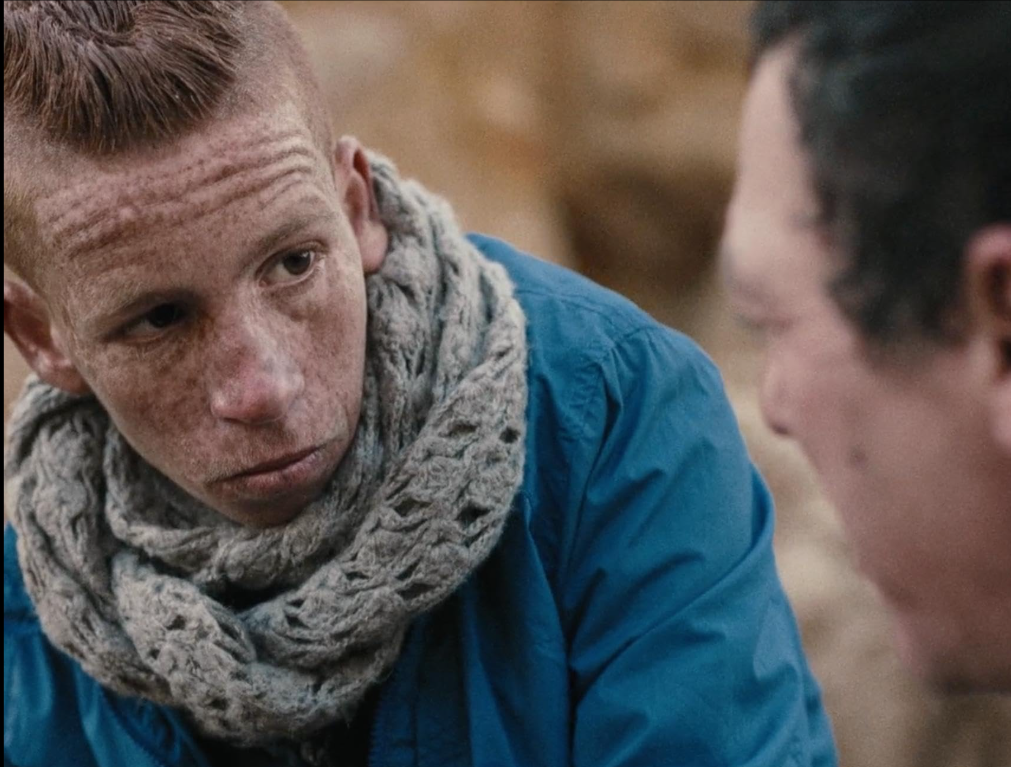
The 25-minute short film was shown at the Maghreb International Film Festival and won the Prix Iris for Best Short Film at the Quebec Cinema Awards. In the same year, it was further nominated for an Oscar. Brotherhood is a complex portrayal of Tunisian family politics that ‘challenges views on faith, prejudice, and extremism’, and builds on Joobeur’s directorial debut, Gods, Weeds and Revolutions(2012). The director’s debut short film documents her own return to Tunisia, where she learns about her grandfather’s terminal illness and simultaneously uncovers the brutalities of living in Tunisia under the regime of Zine El Abidine Ben Ali, who ruled under a state of emergency for more than 20 years. His dictatorship was ousted with the onset of the Jasmine Revolution, otherwise known as ‘the Arab Spring’ (2010-2012).
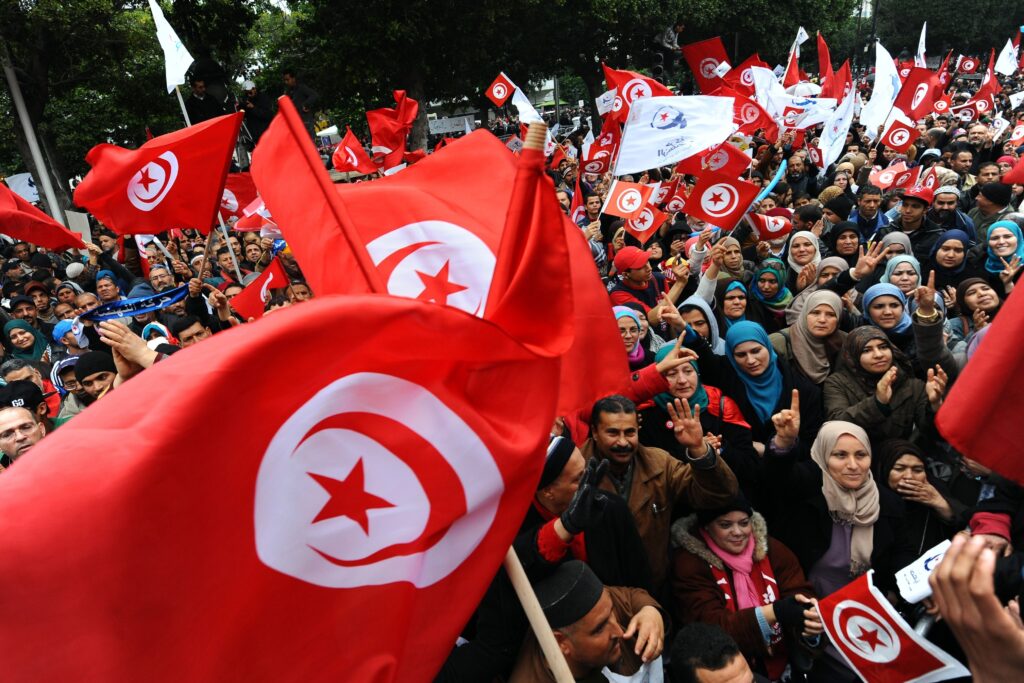
In Brotherhood, Joobeur importantly sheds light on an important era of Tunisian political history. Rather than focus, like her previous film, on Zine El Abidine Ben Ali’s dark regime, the director’s second short film concentrates, instead, on the years that followed, seemingly choosing a timeframe for the narrative where both the regime and the Arab Spring have passed. The Arab Spring, also known as the ‘Jasmine Revolution’, began in Tunisia following the death of a Tunis-based stall-owner, Mohamed Bouazizi (1984-2011). Bouazizi’s self-immolation in protest of government corruption led to a wave of revolutionary action across North Africa that saw the deposition of many leaders across North Africa and Southwest Asia: Tunisia’s Zine El Abidine Ben Ali, Egypt’s Hosni Mubarak, Libya’s Muammar Gaddafi, and Yemen’s Ali Abdullah Saleh.
Taking place following ISIL’s declaration of an ‘Islamic caliphate in Syria’ in 2014, Joobeur directly feeds into Moroccan director Narjiss Nejjar’s 2023 claim that European production companies have turned North Africa into a ‘foyer de radicalisation’ as it appears in North African cinema post-9/11 and post-Arab Spring. To some extent, however, Joobeur’s returnee-protagonist, Malek, challenges Nejjar’s claims about the presence of radicalisation and regimes of terror in North African cinema, as is demonstrated in Algerian director Yamina Bachir’s 2002 film, Rachida. Bachir’s film is set during Algeria’s décennie noire (‘The Black Decade’, otherwise known as the Algerian Civil War). The film follows its eponymous protagonist, Rachida (Ibtissem Djaoudi), as she is approached by her former students and asked to plant a bomb in the school at which she works. She refuses and is shot and wounded before she escapes to a nearby village to recover.
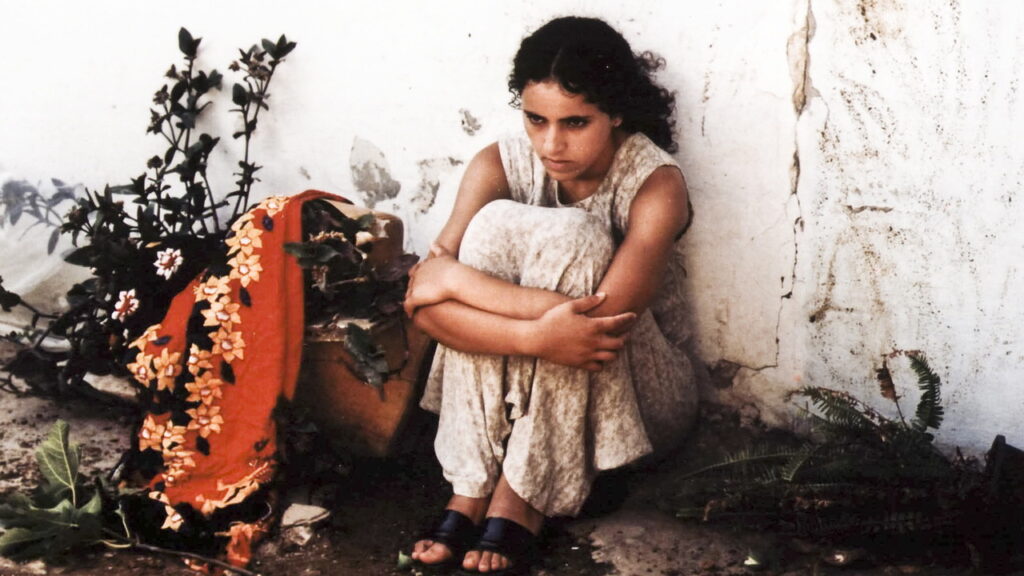
Brotherhood’s Malek is not, like Rachida, shot and wounded before he returns home. He does return to Sejnane, however, with significant psychological wounds that are slowly revealed as emotions heighten between himself and his father. It is only by divulging his experiences in Syria and how he met the young woman he has introduced as his wife that Malek begins to atone for his past behaviour and rebuild his relationship with his father and the rest of his family. Slowly, his father, Mohamed, as well as Malek’s mother and two younger brothers, learned that their eldest son and brother was radicalised, but quickly realised the error of his ways. Most trenchantly, Malek reveals that his new ‘wife’, Reem, was captured by ISIL. At the time of her arrival in Sejnane, alongside Malek, she is revealed to be underage and pregnant, and their journey together, from Syria to Tunisia, comes to act as a redemption arc for the former malcontent, Malek, directly challenging the negotiation of terrorist returns in Tunisian cinema.
Ultimately, Brotherhood (2018) functions as a significant counter-narrative to previous iterations of North African cinema as a bed of radicalisation. Shifting her lens away from the politics of the reign of Zine El Abidine Ben Ali and the Arab Spring, Joobeur grounds her representation of terror in the fragile, precarious space of a Tunisian shepherding family’s home. Malek’s homecoming is not a violent translation of ideologies of terror directly into Tunisian contexts. Rather, through its slow pacing and careful use of conversational silence, Malek’s narrative prioritises family reconciliation over politics or prejudice.
Leave a Reply