In 1975, the Royal Kingdom of Morocco illegally annexed the Sahrawi Arab Democratic Republic (SADR), formerly known as the ‘Spanish Sahara’. Decades later, in 2012, British director Noé Mendelle collaborated with Al Jazeera producer Flora Gregory on a film, Al Khadra: Poet of the Desert. The film traces the lives of Sahrawi peoples and their fight for regional sovereignty of their historical homeland from which they have been displaced for more than half a century.
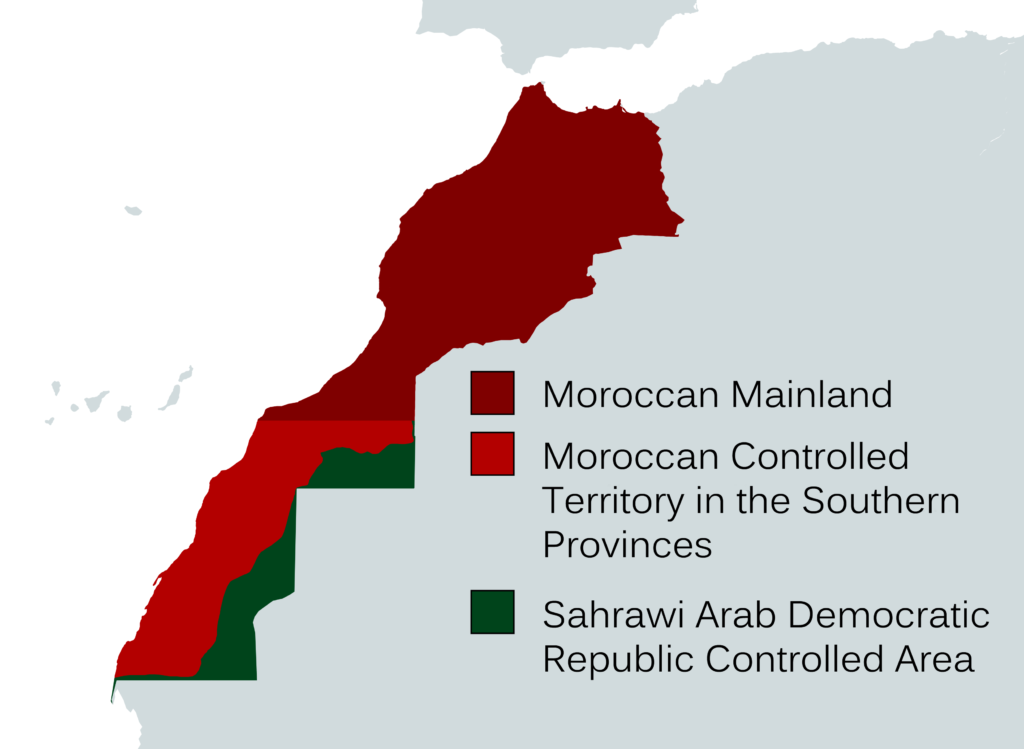
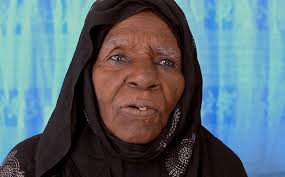
The 25-minute short film exhibits the life and work of Al Khadra Mabrook, a pioneering Sahrawi war poetess and community elder, who admits in the film that she cannot, like many people of her generation, read or write. Yet, through poetry and spoken word, the poet recounts three generations of the Sahrawi Arab Democratic Republic’s (SADR) colonisation by the Royal Kingdom of Morocco. Al Khadra uses a relatively open format for her oral poetry and discusses its importance in Sahrawi culture as a form of documented and recorded resistance to King Hassan II’s own Moroccan form of imperial expansion, yet to be decried by his son and successor, King Mohammed VI. Al Khadra sensitively documents the displacement of indigenous Sahrawi people to refugee camps in Tindouf, Algeria, where generations of families have now lived for more than 50 years. The people of the SADR still await their right to return to their own land, and the territory’s independence is only partially recognised, though it has been an official member of the African Union since 1982.
Produced for Al Jazeera’s ‘Artscape: Poets of Protest’ series by Roxana Vilk, the narrative opens with several title cards presented in English. Each provides an overview of the situation faced by many people living in the ‘non-self-governing’ territory of the SADR. As Walt Hunter (fiction and poetry editor for The Atlantic) writes, however, it is due to recent innovations in North African TV and film that it is ‘no longer possible to argue that poetry is marginal to contemporary political or cultural discourse’. In her late 70s at the time of the film’s release, Al Khadra sensitively addresses many of the atrocities committed against Sahrawi peoples since the Republic’s annexation by Morocco in 1975. Amnesty International, in a 2010 public statement decried how the rights of Sahrawi people were ‘trampled admist protests, violence and repression’ during a raid where ‘thirteen people, 11 members of the security forces and two Sahrawis, died as a result of the violence that erupted in the camp and in Laayoune’.
Since the beginning of her tenure as the Sahrawi war poet, Al Khadra has become affectionately known within Sahrawi advocacy and activist circles as the ‘poet of the rifle’. She shares, in the film, that the women of the Tindouf camps took turns, in large groups, to ensure the safety of others as a measure of protection against spontaneous raids by the Moroccan armed forces. As of 2025, there remains an ‘estimated 173,000 Sahrawi refugees [living] in 5 refugee camps in western Algeria’, and as the World Food Program (WFP) notes in a UN-press release in the same year, ‘the rate of Global Acute Malnutrition in Tindouf refugee camps has reached 13.6%’.
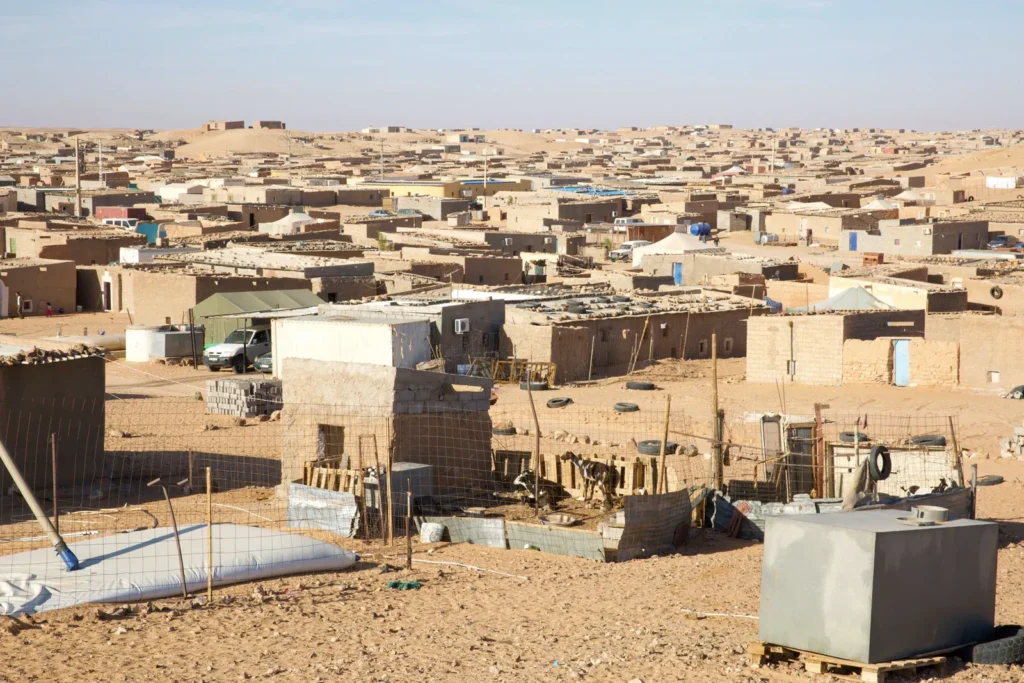
In the film, Al Khadra compares the differing experiences that separate the modes of colonisation and annexation imposed by Spain, in contrast to those imposed in the mid-1970s by King Hassan II’s Moroccan government. She explains: “Spain colonised us, but they didn’t do to us what Morocco did…”, marking an important intervention on discussions of colonialism and imperialism in the region. To be clear, the Sahrawi Arab Democratic Republic is one of Africa’s only remaining colonies, and it is the only state in Africa that continues to be colonised (or ‘administered’) by another African state. It is now 30 years since Namibia gained its independence from South African administrative control in 1990, yet the Sahrawi Arab Democratic Republic remains under the thumb of Moroccan imperialism, displaced in Tindouf refugee camps.
Al Khadra’s oral poetry affirms and testifies to women’s role as protectors of Sahrawi, trained by the Polisario Front, otherwise known as the SADR’s liberation forces, showcasing the centrality of women’s roles in the continued presence of Sahrawi rights activism and direct action following years of sporadic raids where Sahrawi men were rounded up and forced to conscript into the Moroccan armed forces. Some were never to return.So integral was the role of women in protecting each other, as well as the language, traditions, and values of Sahrawi culture, that Polisario soldiers dared not walk ahead of a Sahrawi woman as a mark of respect, signalling a drastic inversion of expectations of gender roles in Northern Africa that isolate the Sahrawi Arab Democratic Republic as culturally distinct from both its coloniser, Morocco, and the location of the refugee camps where the people of the SADR now live: Tindouf, southwestern Algeria. Moreover, in the refugee camps at Tindouf, it is the ‘woman of the tent’ who holds the discretion to allow others into the family home.
Centring on Al Khadra, the narrator-protagonist, Sahrawi women’s resistance is the clear subject of Mendelle’s film. Rightly presented as a female elder, war poet, and protector of Sahrawi ways of seeing and knowing, Al Khadra does not dwell either on her own story, nor does she confine her discussions to the impact that the SADR’s annexation has had on her own family. Rather, in Al Khadra: Poet of the Desert, the war poet’s words are shared between generations, as her granddaughter Aziza Brahim’s career as a singer affirms. Brahim explains in an interview featured in the film that her grandmother’s poems have often been an inspiration for, or the source of, her career as a singer.
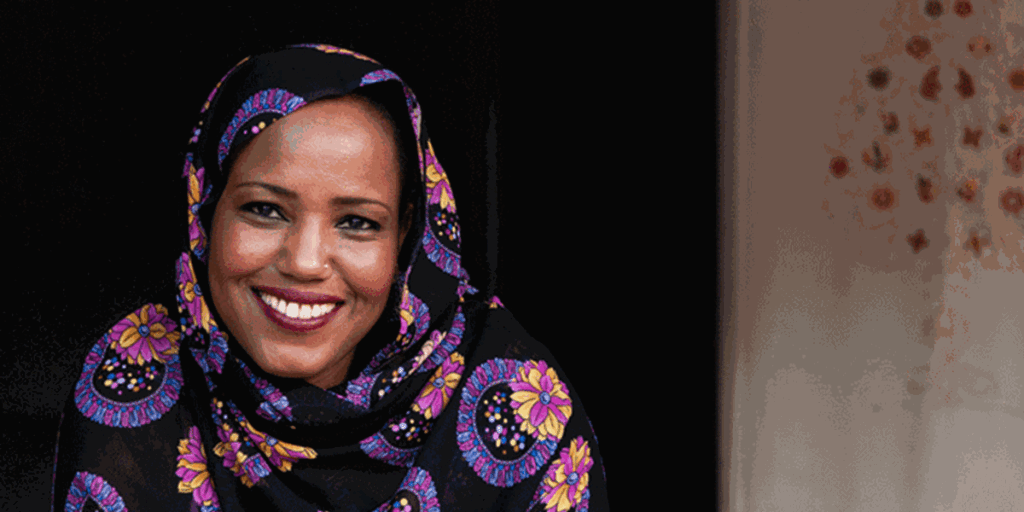
Switching between voiceover narration and appearing in close-up and medium shots, the film presents her as small in stature yet grand in impact. Al Khadra’s voice in the film is the voice of the many: those who have died, been displaced, arrested, tortured, and those who wait, perhaps in vain, to return to their home, visualised with montages of generations of Sahrawi girls and children laid over Al Khadra’s voiceover. Her voice becomes a mouthpiece for the many generations of Sahrawi people whose lives have been derailed by the drastic actions of Morocco’s former Monarch, King Hassan II. His reign would later become known as les années de plomb (‘The Years of Lead’; 1961-1999) for its explicit targeting of those perceived as a threat to the sovereignty of the Moroccan state.
Al Khadra: Poet of the Desert is a film that does more than document an abstract and complex geopolitical situation that has dramatically impacted the lives of many people. rather, it elevates the Sahrawi oral tradition and encourages a critical reconsideration of how oral poetry and the spoken word can be a vital tool in the survival tool-kit of the Sahrawi Arab Democratic Republic. The poet of the rifle’s words, serving as a powerful decolonial critique, exposes the many underexplored realities of the SADR’s annexation and the displacement of its peoples. The documentary functions as a testament to the spirit of Sahrawi women and the centrality of their enduring presence in political, cultural, and social memory in North Africa and beyond. In the film, Al Khadra ultimately reminds the viewer that oral poetry is a form of resistance that cannot be annexed.
Leave a Reply